Day to day life and muse postings and anything else I would like to share my world with you.
General anything that equals forty-two or majorly upsets my state of equilibrium e.g. less than or greater than forty-two.
Self-employed on Universal Credit to get business support
Recipients of Universal Credit full service who are self-employed can now receive business mentoring if their earnings are low.
This programme of support for people who are already self-employed builds on the success of the New Enterprise Allowance (NEA) programme. The NEAoffers mentoring, a weekly allowance for 6 months and access to a start-up loan to people who are out of work and would like to start their own business. Figures out today show that over 111,000 businesses have already been started with the support of the NEA.
This is part of the government's commitment to small businesses. Initial mentoring can last for up to 12 weeks and includes workshops on topics including financial planning and marketing support, as well as help in creating a business development and growth plan. If the plan is viable, people can receive a further year of support and mentoring.
The latest NEA figures show that the north-west had the highest number of start-ups (17,020) followed by London (13,410) and Yorkshire and the Humber (12,150).
Minister for Employment Damian Hinds said:
The NEA has been a huge success in supporting enterprising jobseekers turn their business dreams into a reality, and now we're offering mentoring to help people in receipt of Universal Credit who are already self-employed as they grow their businesses.
Small businesses are the backbone of our economy and we want to do all we can to ensure people succeed.
The figures also show that of the people who have started up a business with NEA support:
over two thirds were aged between 25 and 49, 24% were over the age of 50 and 7% were aged between 18 and 24
40% were women
22% have a self-declared disability
13% were from a black and minority ethnic (BME) background
111,540 businesses have been set up through the NEA scheme. The financial support is paid as a weekly allowance of £65 a week for 13 weeks and then £33 for the following 13 weeks (a total of £1,274 over 26 weeks)
Mentoring is available to Universal Credit full service claimants whose business income fall below, or looks set to fall below, their Minimum Income Floor.
People who already own their own business are eligible for mentoring, but not for the financial support aspect of the scheme.
Successful applicants to the NEA start-up support get access to a business mentor, and those who start their business can receive financial support for up to 6 months, mentoring support for up to 12 months and may be able to apply for a loan of up to £25,000 to help with start-up costs.
The Government is developing proposals to crack down on puppies being reared in unhealthy circumstances by unscrupulous breeders who have a total disregard for their welfare.
Plans under consideration include:
Ensuring that licensed dog breeders must show puppies alongside their mother before a sale is made.
Tightening regulations so that puppy sales are completed in the presence of the new owner – preventing online sales where prospective buyers have not seen the animal first.
Insisting licensed dog breeders can only sell puppies they have bred themselves.
Regulating adverts, including on the internet, by ensuring licensed sellers of all pets, including puppies, include the seller's licence number, country of origin and country of residence of the pet in any advert for sale.
Legislation introducing these proposals could be brought forward early in the New Year.
Measures to tackle unethical and cruel puppy smuggling across borders will also be explored. And plans will also address the breeding of dogs with harmful genetic disorders.
These proposed reforms will apply tighter requirements to more breeders and sellers and will tackle the sale of weak underage puppies, the breeding of unhealthy dogs and dogs with severe genetic disorders, requiring much veterinary treatment and causing much angst, cost and upset to the new owners.
Prime Minister Theresa May said:
Any unscrupulous mistreatment of animals is disturbing – so in our drive to achieve the highest animal welfare standards in the world, we continually look at what more can be done. The arrival of a happy, healthy puppy, as I know myself, is a memorable time for a family – but it's absolutely right we do everything we can to eradicate animal cruelty from our society. The proposals my government is developing will be an important step forward.
Environment Secretary Michael Gove said:
At this time of year it is all too easy to be moved by images online or adverts in the local press advertising new born puppies looking for a home for Christmas. But what we don't see is all too often a sad history of mistreatment and malpractice. That is why we are looking at how we can go further to crack down on unscrupulous breeders so pet owners will have no doubt their new dogs have had the right start in life.
This is one part of our efforts to ensure we have the highest animal welfare standards in the world. We have also ensured CCTV cameras will be mandatory in all slaughterhouses and will increase prison sentences from six months to five years for animal abusers.
In addition, the Government can today confirm it will take forward proposals put out for consultation earlier in the year to improve how the pets are bred and sold. This included a ban on the sale of puppies and kittens under the age of eight weeks, which will now extend to include rabbits, as well as compulsory licensing for anyone in the business of breeding and selling dogs.
Shingles vaccine programme reduces cases and chronic complications
Public Health England publishes first evidence showing the impact of the shingles vaccination programme.
First evidence of the shingles vaccine programme shows a substantial reduction in cases and long-term complications.
Those who are eligible for the free shingles vaccine include people in their 70s who were born after 1 September 1942 and people aged 79 years.
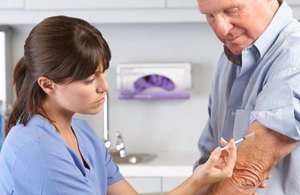
To get your vaccine, contact your GP or pharmacist for more information. If you are within the eligible group, your doctor will recommend the shingles vaccine during general GP visits or your annual flu appointment.
A new study in the Lancet Journal of Public Health shows a substantial decrease in shingles cases and associated complications in the first 3 years since the introduction of the shingles vaccination programme by Public Health England (PHE).
Despite these very positive results, uptake of the vaccine has declined, with a 13% decline in people aged 70 since the start of the programme and an 8.4% decline in people aged 78 years since 2014.
PHE is urging adults aged 70 and 78 to protect themselves by taking up the offer for vaccination from their GP or booking an appointment if they missed out. Shingles is a painful condition and can be especially debilitating for older people.
The new analysis of the shingles vaccine programme, which was introduced in England in September 2013, estimated that the vaccine was 62% effective against shingles and between 70 to 88% effective against post-herpetic neuralgia (PHN), or long term pain, which is one of the main complications associated with shingles.
The study estimated that GP visits for shingles and PHN reduced by 35% and 50% respectively, in those aged 70 during 2013 to 2016.
An estimated 17,000 GP visits for shingles were avoided amongst the 5.5 million individuals who were given the vaccination in the first 3 years of the programme across England.
Dr Mary Ramsay, Head of Immunisations at PHE, said:
I encourage all those who are 70 and 78 to make an appointment with their GP practice to get the shingles vaccine, as well as those under 80 who previously missed out. It's the best way to avoid this very nasty disease and the long-term complications that can develop from having it.
Our population is aging and the risk from getting shingles and complications is higher as you get older. Immunisation is the best way to protect yourself from this painful, sometimes debilitating condition. Taking up the vaccine is an important part of staying healthy as you age.
Shingles is characterised by a skin rash on one side of the body resulting from reactivation of chicken pox virus that has been lying dormant in the body. It can last on average for 2 to 4 weeks and be significantly debilitating, causing loss of sleep and and interference with day-to-day activities. Symptoms can include sharp stabbing pain and burning of the skin in the affected area, feeling unwell, a bad headache and a fever.
Over 50,000 cases of shingles occur in people aged 70 years and over each year in England and Wales, with approximately 50 cases being fatal.
The likelihood of getting shingles increases with age and adults aged 70 and above are more at risk of developing serious complications from it, such as PHN, a severe nerve pain that lasts for several months or more after the rash has gone.
Though many recover from PHN, symptoms can last for years or can become permanent. It is therefore vital for every individual eligible to get their vaccine.
In England, the shingles vaccination programme now targets adults aged 70 and 78 with a catch up programme for those aged 71 to 79.
PHE is encouraging healthcare professionals and the public to be aware of the complications surrounding shingles and to encourage those within the eligible groups to get vaccinated.
Isle of Wight 5G mobile data: Testbed application made to Government
The upcoming 5G mobile data standard should deliver blisteringly fast speeds (expected to be 100Meg – on your mobile!). A bid has been submitted to have it tested here on the Isle of Wight, way ahead of the rest of the UK's 2020 start.
The latest papers for the Isle of Wight Council (IWC) Cabinet reveal that a bid has been submitted for the Isle of Wight to become a test bed for 5G mobile communications.
5G? What's that? Most of the population will be familiar with 4G. Well, 5G is the next development in mobile data.